Uzyskaj dostęp do tej i ponad 240000 książek od 14,99 zł miesięcznie
- Wydawca: epubli
- Kategoria: Literatura popularnonaukowa•Nauki humanistyczne
- Język: angielski
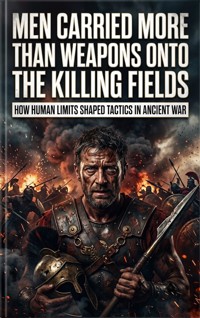
A legionary marching twenty miles in full kit is not thinking about empire. He is thinking about his feet, his thirst, and whether the man beside him will hold the line. This book shifts the focus from generals to the physical and psychological realities that governed pre-industrial combat. It examines how fatigue, hunger, fear, and the sheer weight of equipment shaped what armies could actually do. Why did ancient battles often end in rout rather than annihilation? Because men collapsed before their commanders finished planning. How did armies coordinate without radios? Through signals that failed, messengers who died, and formations that relied on muscle memory. This study draws on archaeological evidence, experimental reenactments, and ancient accounts to reconstruct the embodied experience of pre-modern warfare. It argues that tactical logic was always secondary to human physiology—that the best-laid plans broke against the limits of what soldiers could endure. From the phalanx to the longbow, the same truth holds: strategy is what happens after the body says no. For readers seeking a materialist history of conflict, this book offers an unromantic view of how war was actually fought.
Ebooka przeczytasz w aplikacjach Legimi na:
Liczba stron: 214
Rok wydania: 2026
Odsłuch ebooka (TTS) dostepny w abonamencie „ebooki+audiobooki bez limitu” w aplikacjach Legimi na: