Uzyskaj dostęp do tej i ponad 240000 książek od 14,99 zł miesięcznie
- Wydawca: epubli
- Kategoria: Literatura popularnonaukowa•Nauki humanistyczne
- Język: angielski
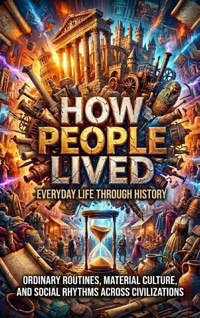
History is not only made by kings and battles—it unfolds in kitchens, workshops, and marketplaces where ordinary people shaped their worlds through daily choices and routines. This exploration reconstructs everyday existence across different societies and epochs, using archaeological findings and documentary sources to reveal how people truly lived. From Roman tenement dwellers to medieval peasants, from Ottoman artisans to Victorian factory workers, discover the material realities that defined human experience. Examine what people ate, wore, and valued. Understand how they organized their homes, raised children, and navigated social hierarchies. Witness how technological changes—from the plow to the printing press—transformed domestic rhythms and community life. Archaeological evidence brings texture to these stories: cooking vessels reveal dietary patterns, building foundations show housing inequality, discarded objects illuminate consumption habits. Documentary records—letters, account books, legal complaints—capture voices usually absent from grand narratives. Each chapter focuses on specific periods and regions, demonstrating that understanding daily life requires examining both continuity and change. The familiar and the foreign coexist in these reconstructions, showing how universal human needs met vastly different material conditions across time and geography.
Ebooka przeczytasz w aplikacjach Legimi na:
Liczba stron: 227
Rok wydania: 2026
Odsłuch ebooka (TTS) dostepny w abonamencie „ebooki+audiobooki bez limitu” w aplikacjach Legimi na: