Uzyskaj dostęp do tej i ponad 240000 książek od 14,99 zł miesięcznie
- Wydawca: epubli
- Kategoria: Literatura popularnonaukowa•Nauki humanistyczne
- Język: angielski
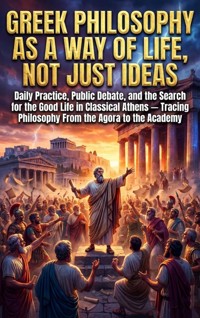
Ancient Greek philosophy is often remembered as abstract theory—Plato's Forms, Aristotle's logic, Socrates' questions. But for the Athenians gathering in the agora, philosophy was intensely practical: how to live justly, how to govern wisely, how to face death without fear, how to cultivate virtue in a chaotic world. This book returns philosophy to its lived context. It follows Socrates through the streets of Athens, questioning citizens about courage and piety until his execution forced a reckoning with democratic justice. It enters Plato's Academy, observing mathematics and dialectic training future statesmen. It walks with Aristotle through the Lyceum gardens, examining how he collected biological specimens and political constitutions alike, seeking patterns in nature and society. It listens to the Cynics rejecting social convention, the Stoics embracing fate, and the Epicureans withdrawing to quiet gardens. Drawing on dialogues, biographical accounts, and archaeological evidence of ancient schools, this narrative reveals philosophy as public performance, political intervention, and personal discipline. It examines how Greek thought responded to plague, war, tyranny, and imperial conquest—how ideas about reason, happiness, and the soul emerged from concrete historical crises. From the trial of Socrates to the spread of Hellenistic schools across the Mediterranean, this is the story of how philosophy became a way of life before it became a university subject. Ancient practices of questioning, community, and self-examination offer lessons about thinking clearly in turbulent times.
Ebooka przeczytasz w aplikacjach Legimi na:
Liczba stron: 242
Rok wydania: 2026
Odsłuch ebooka (TTS) dostepny w abonamencie „ebooki+audiobooki bez limitu” w aplikacjach Legimi na: