Uzyskaj dostęp do tej i ponad 240000 książek od 14,99 zł miesięcznie
- Wydawca: epubli
- Kategoria: Literatura popularnonaukowa•Nauki humanistyczne
- Język: angielski
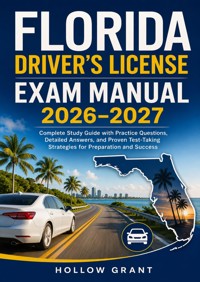
Prepare confidently for the Florida Driver's License Exam with this comprehensive 2026–2027 study guide. Designed for new drivers and anyone preparing for the Florida DMV knowledge test, this manual provides a practical way to review essential driving rules, road signs, traffic laws, safe driving practices, and important concepts commonly covered on the written exam. Inside, you'll find practice questions designed to reinforce your knowledge and help you become familiar with the types of questions you may encounter during your test. Detailed answers and explanations make it easier to understand why an answer is correct and identify areas that need additional study. The guide also includes proven test-taking strategies to help you approach questions carefully, manage your time, avoid common mistakes, and improve your confidence before exam day. Whether you are studying for your first learner's license, renewing your knowledge, or simply looking for additional Florida driving test practice, this book provides an organized resource for your preparation. Use the study guide as part of your regular review, work through the practice questions, check the detailed explanations, and focus on areas where you need more practice. With consistent preparation, you can walk into your Florida driver's license knowledge exam feeling better prepared and ready to demonstrate what you know.
Ebooka przeczytasz w aplikacjach Legimi na:
Liczba stron: 333
Rok wydania: 2026
Odsłuch ebooka (TTS) dostepny w abonamencie „ebooki+audiobooki bez limitu” w aplikacjach Legimi na: