Uzyskaj dostęp do tej i ponad 240000 książek od 14,99 zł miesięcznie
- Wydawca: epubli
- Kategoria: Literatura popularnonaukowa•Nauki humanistyczne
- Język: angielski
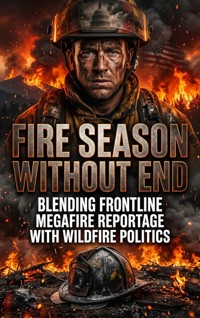
A megafire is defined as a wildfire burning more than 100,000 acres — a threshold that, as recently as the 1980s, was crossed only rarely and under exceptional conditions. Since 2000, more than a dozen American states have each broken their own historical record for the largest wildfire ever recorded, several of them breaking that record multiple times in the same decade. Colorado shattered its all-time record four times in four years beginning in 2010. The 2013 Rim Fire in California's Sierra Nevada was, at the time of burning, the second largest wildfire in the state's recorded history — and by 2023 it ranked merely eleventh. The era of the megafire is not a warning of what may come. It is an accounting of what has already arrived. The science behind this transformation is not in dispute. Three converging forces have restructured fire's relationship with the American landscape: a century of aggressive fire suppression — codified in the US Forest Service's 1935 "10 a.m. policy," which mandated the extinguishing of every fire by the morning after detection — created a vast accumulation of unburned biomass in Western forests that now functions as fuel waiting for ignition. Climate change has extended fire seasons, reduced snowpack, and produced the sustained drought conditions in which vegetation desiccates into tinder months earlier than historical norms permitted. And decades of residential development into the wildland-urban interface — the contested, poorly governed boundary where human settlement meets combustible forest — has placed hundreds of thousands of homes in the direct path of fires that no suppression strategy was ever designed to stop.
Ebooka przeczytasz w aplikacjach Legimi na:
Liczba stron: 215
Rok wydania: 2026
Odsłuch ebooka (TTS) dostepny w abonamencie „ebooki+audiobooki bez limitu” w aplikacjach Legimi na: