Uzyskaj dostęp do tej i ponad 240000 książek od 14,99 zł miesięcznie
- Wydawca: epubli
- Kategoria: Literatura popularnonaukowa•Nauki humanistyczne
- Język: angielski
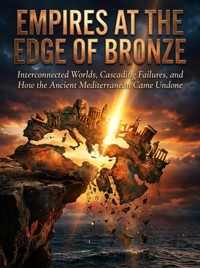
For nearly three centuries, the Late Bronze Age Mediterranean functioned as something remarkably close to a globalized world — kingdoms trading across open sea lanes, palace economies dependent on copper from Cyprus and tin from distant Anatolia, diplomatic correspondence flowing between pharaohs and Hittite kings in a language neither spoke natively. It was a system of extraordinary reach and, as the twelfth century BCE would make catastrophically clear, extraordinary fragility. When it ended, it ended almost everywhere at once. Eric Cline's foundational scholarship on 1177 BCE has established that no single cause explains the Bronze Age collapse. What destroyed the Mycenaean palaces, depopulated Ugarit, and fractured Egypt's imperial grip over the Levant was not one blow but the simultaneous convergence of pressures that a complex, tightly coupled system had no capacity to absorb. The maritime confederacy known as the Sea Peoples delivered visible, documented violence — their movements recorded on temple walls at Medinet Habu with the administrative precision of a power desperate to frame chaos as manageable threat. But the Sea Peoples arrived into a world already under strain. Prolonged drought across the eastern Mediterranean had reduced harvests across multiple growing seasons. Internal palace redistribution systems — the engines of Bronze Age economic coherence — were failing before the first ship arrived in hostile waters.
Ebooka przeczytasz w aplikacjach Legimi na:
Liczba stron: 665
Rok wydania: 2026
Odsłuch ebooka (TTS) dostepny w abonamencie „ebooki+audiobooki bez limitu” w aplikacjach Legimi na: