Uzyskaj dostęp do tej i ponad 240000 książek od 14,99 zł miesięcznie
- Wydawca: epubli
- Kategoria: Literatura popularnonaukowa•Nauki humanistyczne
- Język: angielski
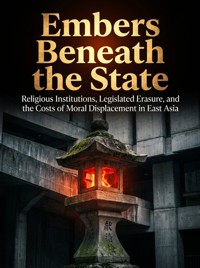
There are states that did not simply separate themselves from religion. They legislated its diminishment — systematically, procedurally, over decades — and then inherited the silence they had engineered. Across East Asia, the twentieth century produced some of the most comprehensive experiments in enforced secularization in recorded history. What emerged was not neutrality. It was a structured absence, felt most acutely in the spaces where moral authority, communal memory, and civic meaning had once been housed. The legal architecture of religious suppression followed a recognizable pattern across different regimes and national contexts. Asset confiscation laws dismantled centuries of institutional wealth held by Buddhist monasteries, Taoist temples, Confucian academies, and Christian congregations. Curriculum reforms removed religious and ethical frameworks from public education, replacing them with ideological content that rarely survived the political cycle that generated it. Religious registration systems created a bureaucratic threshold between tolerated belief and criminalized practice — a threshold whose position shifted with the political temperature of each era. These were not simply restrictions on personal piety. They were the systematic delegitimization of institutions that had served as mediators between state power and daily human life for generations. What the legislation could not dissolve, communities concealed.
Ebooka przeczytasz w aplikacjach Legimi na:
Liczba stron: 642
Rok wydania: 2026
Odsłuch ebooka (TTS) dostepny w abonamencie „ebooki+audiobooki bez limitu” w aplikacjach Legimi na: