Uzyskaj dostęp do tej i ponad 240000 książek od 14,99 zł miesięcznie
- Wydawca: epubli
- Kategoria: Literatura popularnonaukowa•Nauki humanistyczne
- Język: angielski
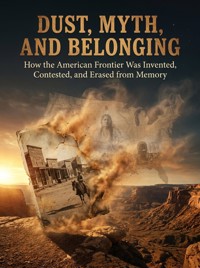
There is a version of the American West that never existed — and yet it shaped how a civilization understood itself. Dime novels and early Hollywood Westerns did not document the frontier; they manufactured it, compressing decades of territorial violence, economic desperation, and ethnic coexistence into a single heroic narrative centered on a white male settler and a rifle. That image, endlessly reproduced, displaced the actual history beneath it. Megan Kate Nelson's scholarship forms the departure point for a deeper inquiry: not merely what was distorted, but why the distortion proved so durable, and who it cost. The frontier was populated by those the myth systematically erased. Transcontinental Chinese laborers built the infrastructure of westward expansion under conditions that bordered on coerced servitude, yet appear nowhere in the popular iconography. Black cowboys made up a substantial share of the cattle-driving workforce; their presence was excised from the cinematic archive before it was ever fully acknowledged. Indigenous communities — already living within complex land tenure systems — were reframed as obstacles rather than inhabitants, a rhetorical move that preceded and enabled their legal dispossession. Each erasure served a function: to render the land available, narratively, before it was made available legally. The Homestead Act of 1862 translated this narrative logic into federal policy.
Ebooka przeczytasz w aplikacjach Legimi na:
Liczba stron: 608
Rok wydania: 2026
Odsłuch ebooka (TTS) dostepny w abonamencie „ebooki+audiobooki bez limitu” w aplikacjach Legimi na: