


29,99 zł
Dowiedz się więcej.
- Wydawca: ALL-IN Rafał Płonkowski
- Kategoria: Romanse i erotyka•Romanse
- Język: angielski
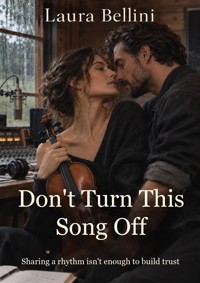
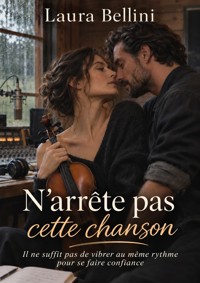
Don't Turn This Song Off: Sharing a rhythm isn't enough to build trust
An emotional contemporary romance about music, second chances, artistic freedom, and the courage to love without losing yourself.
She came to rediscover her music. She never expected to find a man who could hear everything she was trying to hide.
At thirty-four, Celina Dąb has achieved the kind of success most musicians only dream about. She is an acclaimed violinist, admired for her flawless performances, exceptional discipline, and remarkable talent. But behind the standing ovations and prestigious concert invitations lies a painful truth: somewhere along the way, she has forgotten why she loved music in the first place.
After an emotionally devastating performance in Warsaw, Celina steps away from the stage. Determined to reclaim her creativity, she retreats to a secluded recording studio in the forests of Podlasie, Poland. Her plan is straightforward: six weeks, nine original compositions, and an album that belongs entirely to her.
What she hasn't planned for is Miłosz Lew.
A talented music producer with a complicated professional past, Miłosz has spent years distancing himself from the industry's relentless expectations. Quietly confident, perceptive, and occasionally infuriating, he challenges Celina's belief that every beautiful performance must be perfect.
He encourages her to listen to the spaces between notes, embrace unexpected melodies, and rediscover the freedom of creating without fear.
And, little by little, Celina begins to hear something she thought she had lost forever.
Her own voice.
As their professional collaboration deepens, so does an attraction neither can easily dismiss. Between late-night conversations, impromptu guitar sessions, shared laughter, and quiet moments beside a woodland river, an unexpected romance begins to unfold.
For the first time in years, Celina discovers what it feels like to be wanted without being pressured, understood without being judged, and loved without being asked to become someone else.
But their growing closeness is built on a delicate foundation.
When questions emerge about potential licensing agreements and the future ownership of Celina's recordings, she discovers that Miłosz has been keeping important professional conversations from her.
His intentions may be complicated. His feelings may be genuine.
But can love survive when one person has withheld the information the other needed to make her own choices?
Suddenly, the music they have created together becomes inseparable from difficult questions about honesty, independence, loyalty, and responsibility.
Celina must decide whether opening her heart means risking the freedom she has only just begun to reclaim. Miłosz, meanwhile, faces a choice between protecting the life he has built and confronting the consequences of decisions he thought were justified.
Because two people can create something beautiful together and still have to learn how to trust each other.
With intimate emotional storytelling, realistic relationship conflicts, tender romantic moments, and the atmospheric beauty of the Polish countryside, Laura Bellini explores what happens when passion meets vulnerability - and when love demands more than beautiful promises.
Don't Turn This Song Off is a character-driven, slow-burn contemporary romance for readers who enjoy mature protagonists, emotional depth, creative ambition, mutual respect, and relationships tested by real choices.
Sometimes the most important part of a melody is the silence that forces us to listen.
And sometimes the greatest act of love is allowing another person to keep their own voice.
This publication was prepared using tools that support the creative process, including artificial intelligence solutions. The final concept, structure and editing are the responsibility of the author.
Ebooka przeczytasz w aplikacjach Legimi lub dowolnej aplikacji obsługującej format:
Liczba stron: 226
Rok wydania: 2026
Podobne













Cover
Don't Turn This Song Off
Sharing a rhythm isn't enough to build trust
Laura Bellini
ROMANS
ISBN: 9788384901144
ALL-IN Rafał Płonkowski
Table of contents
Title page
INTRO
Chapter 1 - The Price of Silence
Chapter 2 - Between the Notes
Chapter 3 - The Sounds We Cannot Hear
Chapter 4 - What Was Never Written in the Score
Chapter 5 - The Right to Say No
Chapter 6 - The First Time Without a Score
Chapter 7 - Between Desire and Truth
Chapter 8 - On the Other Side of the Stage
Chapter 9 - The Courage to Be Imperfect
Chapter 10 - Beyond a Safe Distance
Chapter 11 - Room for Two
Chapter 12 - The Terms We Never Agreed On
Chapter 13 - Not Everything Is for Sale
Chapter 14 - Everything We Might Lose
Chapter 15 - The Truth in the Fine Print
Chapter 16 - Silence After the Final Chord
Chapter 17 - In My Own Voice
Chapter 18 - The Cost of Doing the Right Thing
Chapter 19 - On Equal Terms
Chapter 20 - The Song We Didn't Turn Off
Landmarks
Cover
Title page
Table of contents
Start of content
INTRO
The first sound I drew from my violin was so unfamiliar that I instinctively glanced at the instrument, as though I had accidentally taken someone else's out of its case. The A string answered sharply, impatiently, with an unpleasant scrape of the bow. I stopped after three notes. Silence settled over the studio, broken only by rain striking the wooden windowsill and the faint crackle of the stove.
"Wonderful," I muttered. "Four months away, and I sound like a student seeing sheet music for the first time."
I settled the violin against my shoulder and tried again. This time, my fingers did exactly what I asked of them. My technique had never failed me. Even during my last concert, when I stood before a packed audience at the National Philharmonic in Warsaw and felt as though someone had switched off everything inside me except my muscle memory, I played flawlessly. The audience rose to its feet. The conductor shook my hand. Flowers were delivered to my dressing room, and then I closed the door and sat on the floor for twenty minutes, unable even to take off my concert shoes.
I hadn't performed once since that evening.
Now, in a wooden house several kilometres from a village in Podlasie, I intended to find out whether I could still play for pleasure. Not for an audience, reviewers, or the people who had spent years telling me how disciplined I was. Above all, not for those who believed talent came with an obligation to prove your worth endlessly.
A navy-blue notebook lay on the music stand in front of me. Inside it, I had written out my plan for six weeks. Nine compositions, no orchestral arrangements, no using electronics to polish the emotion out of the music. Violin, piano, occasionally guitar. Sounds raw enough that I could hear my own mistakes and decide which ones genuinely needed correcting.
The album would be mine.
That had been my first condition before I agreed to come.
I noticed the red recording indicator blinking on the recorder's display. It was still running, even though I had no intention of keeping this attempt. I walked over to the mixing console, found the correct button, and stopped the recording.
That was when I heard a man's voice behind me.
"Shame. It was just getting interesting."
I turned more abruptly than was becoming for a woman who made her living through precise movements.
A tall man stood in the doorway, wearing a dark navy sweater, his hair wet and a mug of coffee in his hand. He looked about forty. He didn't seem like someone who had wandered in looking for reception. He surveyed the room with the ease of its owner, although his gaze settled on me with an interest he made no attempt to conceal.
"The studio was supposed to be empty until tomorrow," I said.
"It was."
"That's an exceptionally unhelpful answer."
The corner of his mouth twitched.
"Miłosz Lew. Producer."
He didn't offer his hand, noticing that I was still holding my violin and bow. Instead, he set his mug on a shelf beside the door.
I knew his name. I had heard recordings he had produced, and I had also heard the stories about his professional silence. For the past year, he had refused interviews, stayed away from industry events, and reportedly turned down several projects that other producers would have given months of their lives to secure. Nobody knew whether he had grown tired of music, of people, or of himself.
"Celina Dąb," I introduced myself, although it was difficult to believe he didn't know who he was supposed to be working with.
"I know."
"Then you also know I booked the studio exclusively for myself today."
"I also know you haven't had lunch. There's soup in the kitchen."
I stared at him in disbelief.
"Is this part of your production method? Walking in without knocking and monitoring people's meals?"
"No. That's part of being a host. My production methods are more irritating."
I should have been annoyed. To some extent, I was. I couldn't stand people who behaved as though they could read my needs within five seconds of meeting me. At the same time, there was something disarming about his answer. He didn't overexplain himself or try to turn everything into a compliment.
Rather than continue the argument, I returned to the centre of the room.
"I'd like to finish rehearsing."
"Of course."
He didn't leave.
I raised my eyebrows.
"Preferably alone."
For a moment, he studied me carefully. Then he nodded and stepped away from the doorway.
"You're right. I'm sorry I came in unannounced."
That simple response surprised me more than his earlier audacity. I was accustomed to men who treated my boundaries as an invitation to negotiate. He simply accepted them.
He was about to leave when he noticed a sheet of paper pinned to the corkboard.
"Is that your track order?"
"A preliminary one."
"I see you've left room for a tenth."
"I'm not planning a tenth."
"Then why does the numbering go up to eleven?"
I pressed my lips together. I didn't want to admit he was right. I had removed two compositions from my plan before arriving, but left the original numbering intact. I couldn't play one without remembering my last concert. I couldn't finish the other.
"Because not everything has to be ready on the first day," I replied.
"I agree."
He retreated into the corridor. I heard his footsteps on the wooden stairs and, a moment later, the quiet closing of a door.
Only then did I release the breath I'd been holding.
I glanced at my phone. There were three missed calls from my former manager and a message I had no intention of opening. I had already refused to take part in the winter concert tour. I wasn't interested in any more arguments about reputation, obligations, and once-in-a-lifetime opportunities. For years, each such opportunity had cost me a little more than I was willing to give.
I placed my bow against the strings.
Instead of the piece I had planned, I began playing a melody I hadn't written down in months. It had come to me one sleepless night, when I was trying to remember why, as a little girl, I could practise for hours without anyone making me. At first, it was simple, almost childlike. Then something restless entered it, a phrase suspended halfway through, like a word someone hadn't dared to speak.
I played longer than I intended. The rain beyond the window grew quieter. I forgot about my phone, my unfinished plan, and the man who had noticed the gaps in my notebook far too easily.
When the final note faded, I heard a soft click.
The recorder was running again.
I approached the console. A new file had appeared on the screen, labelled with the date and the time the recording had begun. I hadn't touched the equipment since switching off my previous attempt. Perhaps it had started automatically, but I wasn't familiar with the studio's configuration yet.
Then I noticed a phone lying beside the keyboard.
It wasn't mine.
A notification glowed on the screen, disappearing before I could look away.
"Licensing offer — awaiting confirmation of the scope of the material."
I didn't recognise the sender. I had no idea whether the message had anything to do with my project. Even so, I felt a familiar, unpleasant tightness in my stomach.
I picked up my own phone and opened my correspondence with Miłosz. Our agreement was there in black and white: no recording would be shared with any third party without my explicit approval. Not demos, not excerpts from compositions, not finished tracks.
I heard his footsteps in the corridor.
This time, he knocked.
"Celina? I left my phone. May I come in?"
I looked at the newly saved recording. At the message containing our agreement. At the door, behind which stood a man whose voice had sounded just as calm when he apologised as when he provoked me into conversation.
"You can," I answered, deliberately abandoning the formal way I had addressed him earlier. "But first, I'd like to ask you something."
He entered and stopped just inside the doorway.
"I'm listening."
I didn't point to the phone. I had no intention of accusing him based on a notification that might have nothing to do with me. Instead, I showed him the recorder.
"Does this system start recording by itself?"
He came over to the console, leaving a little space between us. He smelled of rain, coffee, and something subtly woody. He checked the settings, then shook his head.
"It shouldn't. I'll find out what happened. For now, we won't delete anything or use anything without your say-so."
I looked at him. Up close, I could see the fine lines around his eyes and the mark of an old cut on his hand. He didn't look away, although I remained silent long enough for the conversation to become uncomfortable.
"That melody was beautiful," he said at last. "I've never heard it before."
"That's because I haven't shown it to anyone yet."
"I understand."
He didn't ask me to play it again.
And suddenly, I wished he would.
That was what unsettled me most. Not the unfamiliar phone or the unexpected recording, but the realisation that after only a few minutes of talking to a man I had just met, I wanted to let him into the music I had been protecting from everyone.
"Miłosz?"
"Yes?"
I ran a finger over the closed cover of my navy-blue notebook.
"If I ever let you hear the whole thing, how will I know it still belongs to me?"
He didn't answer immediately. He looked first at the notebook, then at me.
"You'll have to see what I do when we disagree."
The scent of wet wood drifted through the open window. Miłosz stood close enough that a single step would have brought him right beside me, but he didn't take it.
I didn't yet know whether I wanted more to discover his answer or to find out how long I could keep my distance from a man who, instead of promising I could trust him, had just admitted he would have to earn that trust.
Chapter 1 - The Price of Silence
The following morning, I found a note in the kitchen informing me that breakfast was waiting in the refrigerator and that the studio would be available from nine. Beneath it, someone had added in small, slanting handwriting: "The coffee machine only makes decent coffee on the second attempt. Throw away the first cup."
I studied the message and smiled despite myself. Miłosz Lew apparently belonged to that category of people who could operate complicated musical equipment but had lost a years-long battle with a coffee machine. I had no intention of admitting that this small imperfection made him slightly more interesting.
Beyond the window stretched a landscape I wouldn't have been able to reproduce from memory even after several days here. Wet meadows, birch trees, a dark band of forest, and a narrow road disappearing around a bend. The house stood on a small rise, far from the nearest buildings. When I booked my stay, the isolation had seemed its greatest advantage. Now I wondered whether six weeks in the company of a man who could challenge my entire plan with a single sentence might prove more difficult than returning to the stage.
I was thirty-four, and for most of my adult life, I had made decisions based on what was sensible. Sensible studies, sensible contracts, a sensibly chosen repertoire. Even my break had been presented to the world as a sensible rest after an intense season.
The truth was considerably less elegant.
I could no longer bear listening to my own music.
I arrived at the studio fifteen minutes before our agreed time. Miłosz was sitting at the mixing console, wearing a light-coloured shirt with the sleeves rolled up. A list of files filled his computer screen. He looked up when I entered, then pulled out the chair beside him.
"Good morning. Did the coffee survive the test?"
"On the second attempt."
"So the instructions came in handy."
"Don't get used to me following your recommendations."
He smiled, but before he could reply, he pointed at the screen.
"I checked yesterday's recording. Automatic recording had been enabled during the previous session. I didn't notice when I was preparing the studio. My mistake."
I felt relieved, although I had no intention of showing it too openly.
"Has the file stayed here?"
"Yes. Nobody has listened to it apart from me. I needed to check what had been recorded."
"I would have preferred you to ask first."
He nodded.
"I should have. It won't happen again."
He didn't try to convince me that I was overreacting. That left me without the argument I had prepared. Instead, I became uncomfortably aware that I could be firm without having to defend every word I said.
"I want to keep a copy," I said.
"Of course. I'll transfer it to your drive. We'll also keep a record of where the file came from, so there's no confusion."
I placed my navy-blue notebook on the desk.
"In that case, we can begin."
Miłosz looked at my notes but didn't reach for them without permission. Only when I slid the notebook towards him did he open the first page. For several minutes, he read in silence, running a finger along the comments I had written. I watched his face, searching for the reactions I had grown accustomed to during meetings with producers. Impatience, condescension, or the kind of instant enthusiasm that made it easier for someone to impose their own ideas later.
I found none of them.
"You want to record nine compositions in six weeks," he said eventually.
"Yes."
"Does each one need to have its own fixed structure?"
"Each one already has a structure."
"That's not what I'm asking. I mean, will you allow the structure to change during recording?"
I studied him more carefully.
"I'm not planning an improvised album."
"Neither am I. But if you've come here only to reproduce the notes you've written down, we could record everything in three days."
"Technically, probably."
"And it would probably be a very good record."
I hadn't expected that answer.
"But I can hear a 'however' coming."
"However, it wouldn't be the record you came here to make."
I closed the notebook.
"You don't know me well enough to make that judgement."
"I know your recordings."
"That's not the same thing."
"Exactly why I want us to work differently."
For a moment, all I could hear was the steady hum of the ventilation system. I didn't like how confidently he spoke about something I couldn't even name myself. I liked even less that part of me wanted to hear what he would say next.
"What's your condition?" I asked.
Miłosz leaned back in his chair.
"For the first week, we don't record anything intended for the album. We rehearse, explore the sound, and look for what genuinely interests you. No pressure to finish a piece."
"I didn't spend two months preparing a plan just to abandon it now."
"I'm not asking you to abandon it. I'm asking you to consider the possibility that not everything in it is necessary."
"Easy to say when you won't be the one held responsible for the result."
"I'll be responsible for the quality of the production. That's precisely why I'm making this a condition."
I felt the familiar irritation rising. People in the music industry loved talking about artistic freedom until the possibility of actually giving an artist control appeared. Then came the suggestions, consultations, and arguments about the market. I had heard often enough that I should be more accessible, more daring, or less demanding.
"I won't agree to an experiment when I don't know the rules," I said.
"I understand. Let's establish them together."
Once again, his answer threw me off balance.
"You're not going to try to persuade me?"
"I am. I just don't intend to do it by ignoring your objections."
He stood and approached the instrument beneath the window. It was an old, dark wooden piano, scratched in places, with one leg that had been replaced. He lifted the lid, pressed a few keys, and grimaced slightly.
"Do you hear that?"
"The second F is a little flat."
"Exactly. The piano tuner is coming on Thursday. Before then, I'd like to see whether this instrument might work for one of your compositions."
"Out of tune?"
"Imperfect. There's a difference."
He sat down and played a simple sequence of chords. It wasn't particularly impressive. Yet when he played, it sounded as though every note had the right to resonate until it had completely faded. Miłosz didn't rush or demonstrate his abilities. He listened to the instrument instead of forcing it into obedience.
"You play well," I said before I could stop myself.
"Well enough to know when to stop."
He turned his head, and his gaze rested on me a second longer than the conversation required. I noticed faint signs of tiredness beneath his eyes. He was attractive in a way that had little to do with perfect facial features. What drew me was his attentiveness, the quiet confidence of his movements, and the fact that he didn't need to fill every moment with the sound of his own voice.
"I don't want another record that someone will describe as technically correct," I said more quietly.
Miłosz lifted his hands from the keyboard.
"Then we already agree on something."
"That doesn't mean I'm accepting your conditions."
"I'm not expecting immediate surrender."
"Good. Because you won't get it."
He laughed briefly. It wasn't the laugh of a man who thought I was amusing despite my intentions. It was more like someone who genuinely enjoyed our exchange.
We returned to the mixing console. I opened my notebook and proposed a compromise: three days of rehearsals, with no obligation to use the recordings, followed by a joint evaluation of the material. If we didn't find a direction, we would return to my original plan. Miłosz considered it for a moment, then asked for a fourth day.
"Why?"
"Because on the first day, you'll try to prove your plan is perfect. On the second, you'll be angry that it isn't. On the third, we might actually start working."
"And on the fourth?"
"We'll see whether you still want to throw me out."
I couldn't help smiling.
"You're insufferably confident."
"Sometimes. It's one of my less attractive qualities."
For a moment, neither of us spoke. I realised we were sitting close together, with very little space between our shoulders. He didn't move towards me. I remained still as well, more aware of the distance between us than I cared to admit.
Eventually, I pushed the notebook aside.
"Four days. Then I make the decision."
"We discuss the material together," he corrected me. "The decision about your compositions belongs to you."
I looked directly into his eyes.
"I'll remember those words."
"I'm counting on it."
That afternoon, we began our first rehearsal. Miłosz didn't change my notes. Instead, he asked me to play one of the pieces without a metronome, without looking at the score. Initially, I refused. But when he showed me how he intended to position the microphones, I began to understand what he had in mind. It wasn't about imperfection for its own sake. He wanted to capture the moment when the music stopped being an exercise.
The first attempt was stiff. The second, too cautious. During the third, I stopped halfway through a phrase.
"I can't do it," I said.
Miłosz switched off the monitor feed.
"Do what?"
"Play as if nothing matters."
"That's not what I asked you to do."
"You asked me to stop controlling every detail."
"That's not the same thing."
I put down my bow, frustrated by my own helplessness.
"Sometimes it is to me."
He didn't respond immediately. He walked to the window and pulled back the heavy curtain. Afternoon light flooded the room, drawing warm honey tones from the wood.
"Celina, I'm not trying to take control away from you. I just want you to be able to decide when you really need it."
He said it without pressure. And that was precisely why his words affected me more deeply than they should have.
I looked away before he could see how much they had moved me.
When we finished, a dozen or so short recordings appeared on the computer screen. None of them was ready for the album. Even so, for the first time in months, I didn't feel disappointed when the work was over. I was tired, but I wasn't empty.
Miłosz saved the material in a folder labelled with my surname.
"You'll get a copy of every file today," he said. "No selection on my part."
"Thank you."
I closed my violin case and headed for the door. I stopped, however, when I heard my name.
"Celina?"
I turned around.
"Yes?"
"That melody from yesterday. You don't have to show it to anyone. But if you ever want to come back to it, I'd like to listen."
For a moment, I watched him, searching for some hidden request for permission to do something more.
I found none.
"Maybe," I replied.
He smiled.
"That's a fair answer."
I left the studio with the strange feeling that something more important than agreeing on a schedule had happened. For several hours, I hadn't needed to be an exceptional violinist or a woman who always knew what she wanted. I could simply be a person trying to recover her own voice.
On the stairs, I stopped and looked through the window at the darkening forest. The sound of the piano drifted up from downstairs. Miłosz played a few chords, fell silent, then started again.
I didn't recognise the melody.
Even so, I stayed on the stairs until he finished.
Chapter 2 - Between the Notes
On the second day, the smell of freshly baked bread woke me. For several seconds, I didn't know where I was. The wooden ceiling, pale bedding, and whisper of rain beyond the window bore no resemblance to my Warsaw apartment. Only when I spotted my closed violin case standing beside the wardrobe did I remember Podlasie, the studio, and the producer who believed I could make better music if I stopped trying quite so hard.
A message from my friend Marta was waiting on my phone.
"Still alive? Has that mysterious producer of yours driven you mad yet?"
I smiled and replied that I was alive, and that driving me mad apparently formed part of his professional qualifications. Marta answered immediately.
"Sounds promising. Just be careful you don't try to be brave instead of happy again."
I put my phone down.
Marta was the only person I had told the truth about my last concert. Not the convenient version about exhaustion and needing a break, but about the moment when, standing in front of an audience, I had felt completely disconnected from my own life. For a long time, I had believed that was the price of success. Marta had called it losing myself.
I still didn't know whether she was right.
In the kitchen, I found Miłosz slicing bread. He was wearing dark trousers and a faded T-shirt. Without yesterday's shirt, he looked less formal, which did nothing to make keeping my distance easier.
"Good morning," he said without turning around. "Coffee's ready. Even the first batch turned out well this time."
"You're making progress."
"I'm trying to earn some recognition."
He placed a plate in front of me and indicated a seat at the table. I sat down, feeling for a moment like a guest in the home of someone I had known much longer than two days.
"Who baked the bread?" I asked.
"Mrs Zofia from the neighbouring village. She brings it twice a week."
"It's excellent."
"I'll tell her. She likes compliments, particularly from people who don't pretend to know anything about baking."
I looked at him over my mug.
"Was that a dig at me?"
"Not yet. We're still getting to know each other."
I laughed before I could maintain a serious expression. Miłosz returned my smile, then slid a small sheet of paper with a written schedule towards me.
"Before we begin, I'd like to establish a few things."
I read the proposal. Four days of rehearsals, daily copies of the recordings, and a joint listening session at the end of each day. No guests in the studio without prior consent. No publishing excerpts on social media. The final point concerned the right to stop a session without having to explain why.
"This is your proposal?" I asked.
"Yes."
"Most producers I've worked with would consider the last point an organisational disaster."
"Most producers haven't worked with you over the past two days."
I studied him.
"What's that supposed to mean?"
"That when something overwhelms you, you try to play even more precisely. And when you can't cope anymore, you apologise for needing a break."
I didn't like how quickly he had noticed.
"You don't know the reasons."
"I don't need to know them to avoid adding more pressure."
For a moment, I stared at the paper. Then I took out a pen and added a condition of my own: any decision concerning the use, sharing, or commercial exploitation of recordings would require separate, explicit consent from both parties. A verbal agreement made during a session would not be sufficient.
Miłosz read the addition and nodded.
"Reasonable."
"You're not going to negotiate?"
"I don't see any reason to. It's your music."
I noticed, however, that his pen paused above the paper for a fraction of a second before he signed the agreement. I might have imagined it. He could just as easily have been wondering whether there was enough ink left.
"And your work?" I asked.





