107,99 zł
Dowiedz się więcej.
- Wydawca: epubli
- Kategoria: Literatura popularnonaukowa•Nauki humanistyczne
- Język: angielski
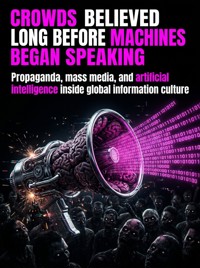
Human networks rarely reward truth alone. Throughout history, societies have preserved stability by circulating stories capable of binding strangers together, even when those stories distorted reality. Information systems therefore evolved not merely to inform populations, but to coordinate belief itself. This account examines how propaganda and collective narratives shaped political order from the ancient world to the digital age. Religious texts, state bureaucracies, newspapers, and broadcast media all strengthened large-scale cooperation by filtering which versions of reality became socially acceptable. The modern global network intensified this process, allowing misinformation, emotional signaling, and ideological repetition to spread faster than factual correction. The book then turns to artificial intelligence as a new historical actor. Unlike earlier technologies that transmitted human decisions, AI systems increasingly generate recommendations, narratives, and persuasive structures autonomously. This creates unprecedented risks for democratic institutions, social trust, and human agency itself. The danger lies not only in false information, but in systems capable of adapting persuasion strategically without human intention guiding every step. Seen historically, the digital era represents less a communication revolution than a transformation in who — or what — participates in shaping collective belief.
Ebooka przeczytasz w aplikacjach Legimi lub dowolnej aplikacji obsługującej format:
Liczba stron: 162
Rok wydania: 2026