117,99 zł
Dowiedz się więcej.
- Wydawca: epubli
- Kategoria: Literatura popularnonaukowa•Nauki humanistyczne
- Język: angielski
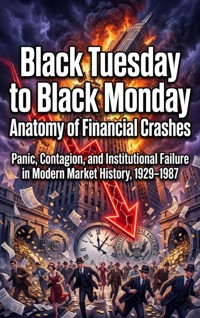
Every major financial crash arrives with its own particular logic — a unique combination of excess, blindness, and the moment when collective confidence tips into collective panic. Yet across a century of market collapses, from the Wall Street crash of 1929 to the single-day devastation of Black Monday in 1987, the underlying anatomy remains remarkably consistent: leverage accumulates, warning signs are rationalized away, and institutions designed to prevent catastrophe instead accelerate it. This book examines history's most consequential market crashes not as isolated disasters but as recurring patterns in the relationship between financial innovation, regulatory failure, and human psychology. It traces how the 1929 collapse dismantled the myth of permanent prosperity, how the 1973 oil shock exposed the fragility of postwar economic assumptions, and how Black Monday demonstrated that computerized trading could transform a correction into a freefall faster than any human regulator could respond. Drawing on Federal Reserve archives, congressional testimony, brokerage records, and the firsthand accounts of traders, policymakers, and ordinary investors who lost everything, this is a structural history of financial catastrophe — examining not just what crashed, but what each crash revealed about the system that produced it and the reforms that followed, succeeded, or quietly failed.
Ebooka przeczytasz w aplikacjach Legimi lub dowolnej aplikacji obsługującej format:
Liczba stron: 183
Rok wydania: 2026