Uzyskaj dostęp do tej i ponad 240000 książek od 14,99 zł miesięcznie
- Wydawca: epubli
- Kategoria: Biznes, rozwój, prawo•Biznes, rozwój
- Język: angielski
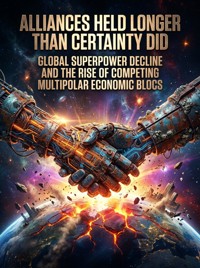
Every dominant power eventually confronts the limits of its reach. Military superiority can endure long after political confidence weakens, while economic rivals slowly reshape the balance of global influence from beneath established alliances and institutions. This account investigates the structural pressures facing modern hyperpowers in an increasingly multipolar world. International military bases, naval presence, and regional partnerships once guaranteed unmatched strategic influence. Yet growing economic competition, domestic polarization, and technological fragmentation gradually complicated the ability of any single state to maintain uncontested leadership. The book compares how major powers project influence across different regions through defense agreements, financial systems, and diplomatic networks. Emerging economic coalitions challenged older assumptions about global dependence on Western-led institutions, while internal social tensions weakened political consensus within established superpowers themselves. At the center lies a broader historical question: whether modern hegemony can survive when economic production, digital infrastructure, and political legitimacy become globally dispersed rather than centrally controlled. The changing international order appears here not as sudden collapse, but as a slow redistribution of influence across an unstable world system.
Ebooka przeczytasz w aplikacjach Legimi na:
Liczba stron: 234
Rok wydania: 2026
Odsłuch ebooka (TTS) dostepny w abonamencie „ebooki+audiobooki bez limitu” w aplikacjach Legimi na: